DIY · 7 min read
Building a sauna yourself: an honest guide from the crew that gets paid to do it
Can you build your own sauna? Yes — the frame, insulation, and timber interior are careful weekend-carpenter work. What you must not DIY: wiring the heater. And the part that fails most often isn't either of those, but two small details: the vapor barrier and ventilation. This article splits the project into «do it yourself», «proceed with care», and «call a pro» — with the engineering reason for each.
What's realistic to do yourself
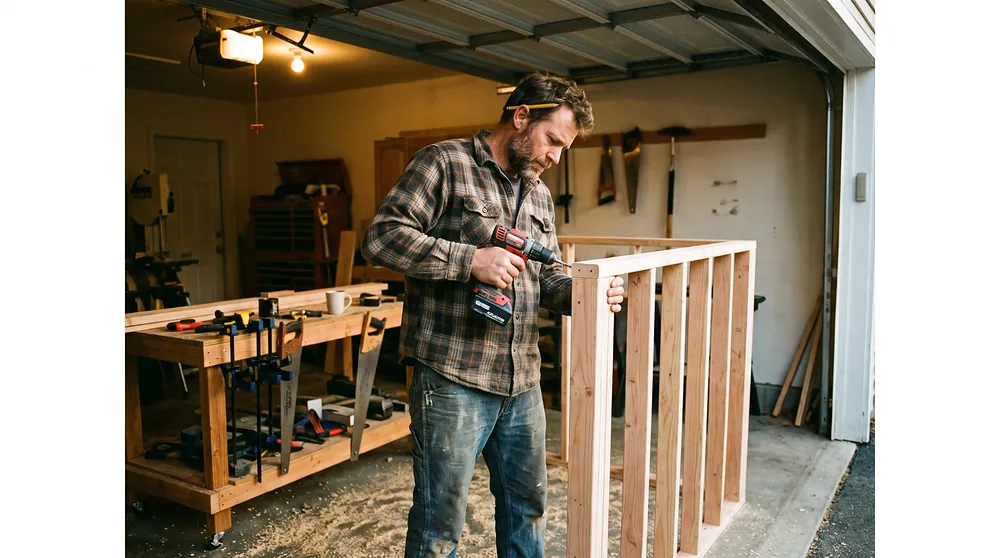
- Cabin frame — 4×6 or 5×7 timber, a simple box structure. The key is square corners and level, not brute strength.
- Insulation — 50 mm rockwool between the studs. Wear gloves, cut it snug, don't over-compress it.
- Interior — tongue-and-groove boards with hidden nailing. Slow but satisfying.
- Benches — aspen or abachi, screwed from below so no hot metal touches skin.
The two details that ruin most DIY saunas
Vapor barrier. Between the rockwool and the interior boards there must be aluminium foil, sealed tight with foil tape, then a 20 mm air gap before the boards. The order is: frame → rockwool → foil → gap → timber. Without that foil and gap, moisture gets into the insulation, condenses, and in Tangerang's 80% humidity mould arrives within 2–3 years — from inside the wall, where you can't see it until it's too late.
Ventilation. A sauna needs air coming in low near the heater and going out high on the diagonal. A sealed cabin with no ventilation feels stuffy, heats unevenly, and the timber never really dries after a session. Two correctly sized vents — that's the difference between a sauna and a hot box.
What you must hand to a pro: the electrics
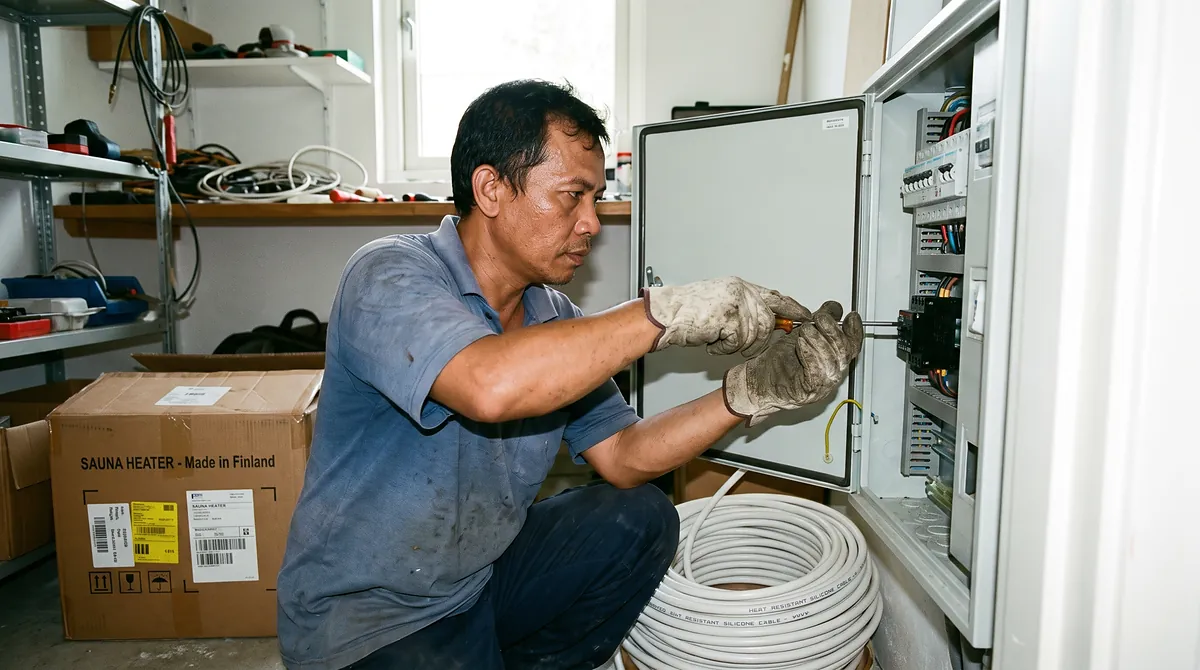
A 6–9 kW heater pulls a heavy, sustained current in a hot room — a combination that doesn't forgive amateur wiring. The minimum done right: heat-resistant SiHF cable, a dedicated breaker in the panel, and an ELCB. Plus the supply question: a 2,200 VA house won't cope, and that's a decision best made before you buy the heater — the math is in the article sauna electrical requirements. Leave this part to a licensed electrician; this is a safety line, not our sales pitch.
An honest look at the cost
DIY materials for a 2×2 m cabin — frame, rockwool, foil, imported interior boards, benches, a tempered-glass door, accessories — plus a branded heater with a warranty (the priciest part) usually land not far below our budget version, which starts at Rp 40 million installed. What you save is labour; what you buy with your weekends is the experience of building it — and for some people that's the whole point. Compare against our installed price list before you decide.
The middle path many people choose
Several of our clients in Citra Raya and Pamulang take a hybrid approach: they do the frame and interior themselves, we come in for the vapor barrier check, the heater and electrical install, then a heating test. Others start from a prefab cabin (Rp 15–35 million installed) as a fast track. Both are valid — a finished sauna always beats a project stalled at the framing stage.
Talk it through first, free, no hard sell
If you're serious about building it yourself, send photos of the room and your plan over WhatsApp. When our team has a spare moment, we'll give you remote advice: what's realistic in your space, the order of the wall layers, and the point where you should stop and call a technician. No pressure to buy anything — just an honest read on your own plan.
This article is educational. Work you carry out yourself is outside our responsibility; electrical work must be done by a licensed technician. Our 2-year construction warranty applies only to work we install ourselves.