Cold plunge
Cold plunge and ice bath in Tangerang
Timber cold plunge tubs with a chiller, assembled and installed by our own crew — from cluster-home terraces to shophouse gyms. Three years in Greater Tangerang, 100+ wellness projects, a 2-year build warranty and a free visualisation from your photo.
A cold plunge is a tub of cold water at 3–15°C with a chiller that keeps the temperature stable — in Tangerang's climate, a steady 30°C year-round, ice water without a chiller lasts only a few hours. We build a wooden tub with a stainless liner, fit a ½–1 HP chiller and ozone or UV filtration, and hand it over ready to use. Package price Rp 45–90 million, installation 1–2 weeks.
Why you need a chiller, not just ice cubes
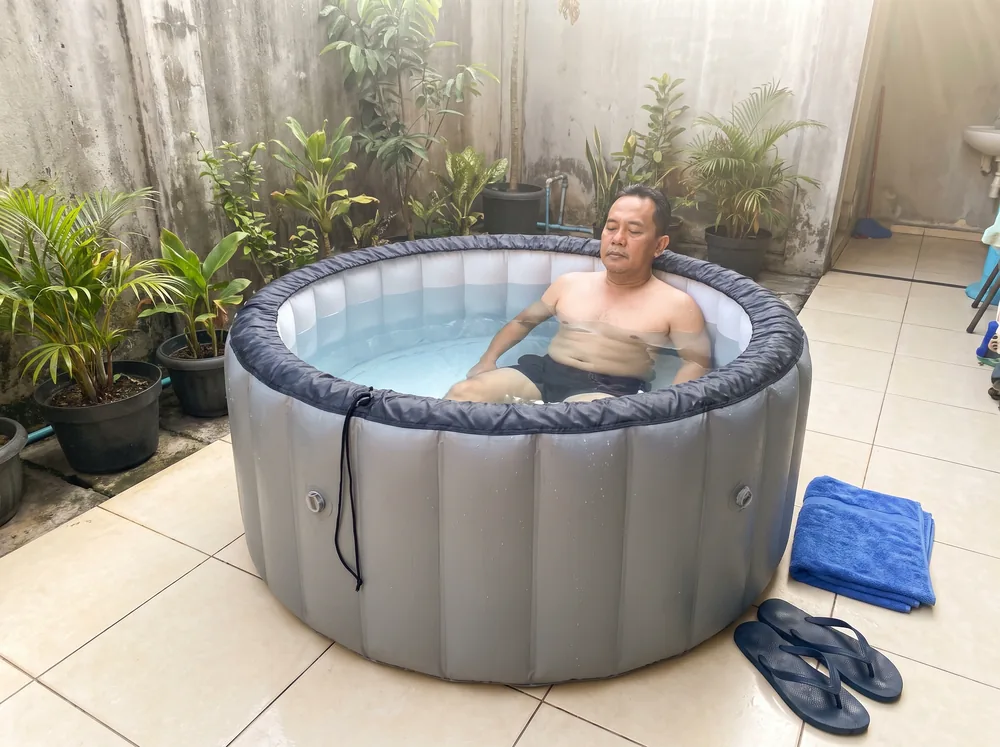
Many of our clients in Gading Serpong and Bintaro start out with a tub full of ice cubes from the minimarket. The first week is fun; the second week it sets in: buying ice every session, inconsistent temperature, water that clouds up fast. A ½–1 HP chiller holds the temperature at whatever you set between 3–15°C, working alongside a circulation pump and filter — the water is cold, clear, and ready whenever you are, not only when you've had time to buy ice.
Tub build: wood outside, stainless inside
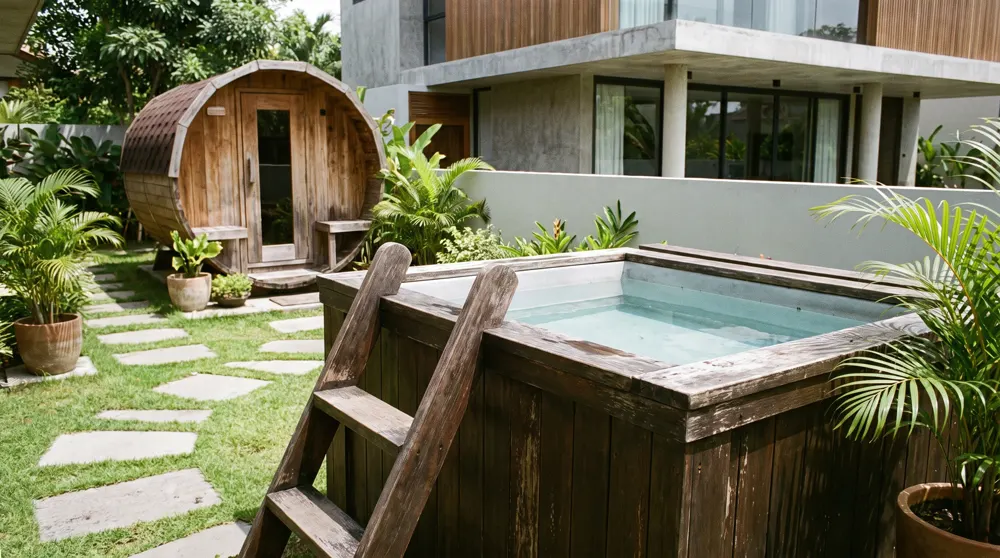
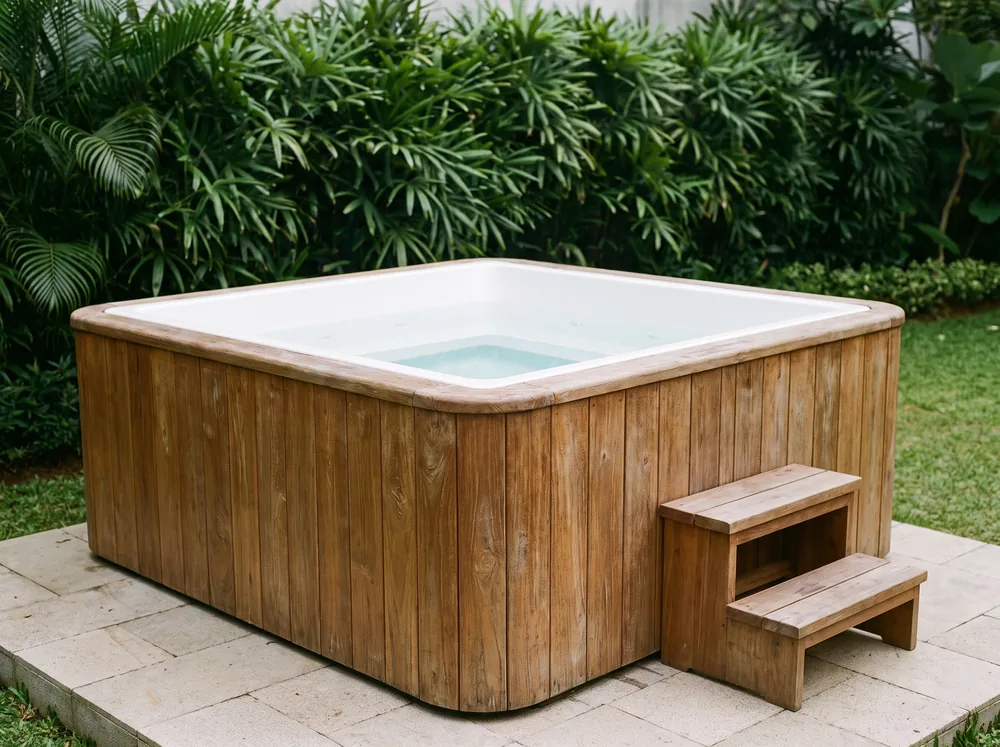
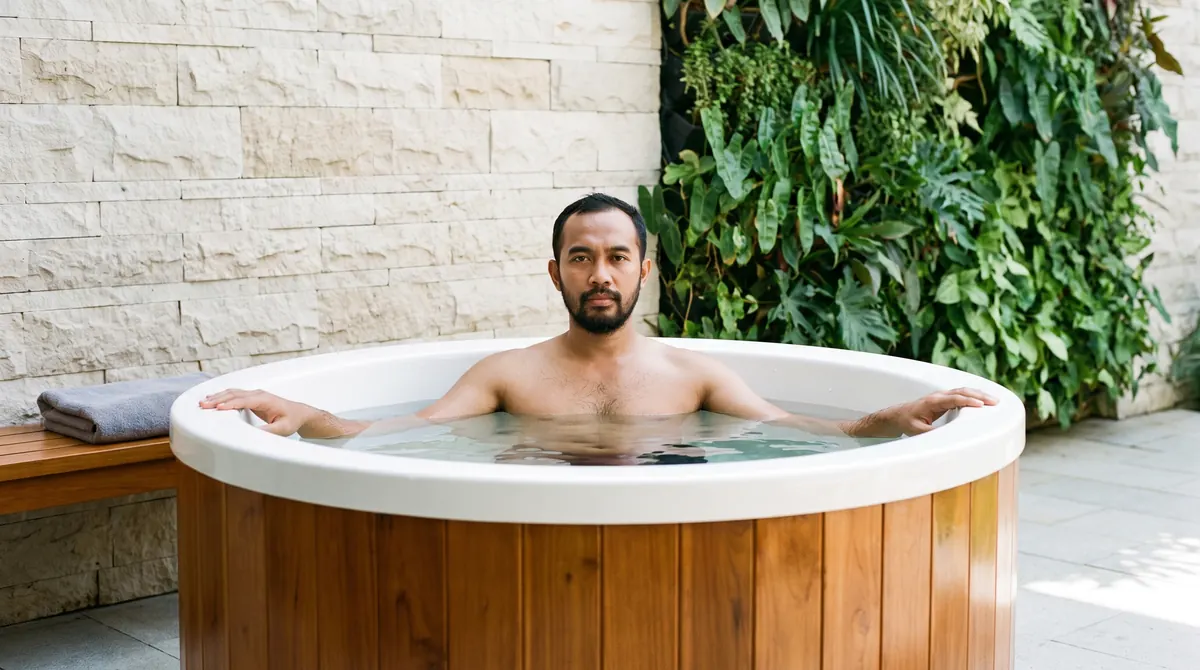
Our tub is a square of larch or thermowood with a stainless or composite liner inside. The wood gives the look and insulation; the liner keeps it hygienic and easy to clean. Each tub is fitted with a drain and the correct slope — old water drains out, the tub is rinsed, no hauling buckets. For a second-floor terrace or rooftop in Alam Sutera, the floor load is worked out from the photos and details you send, with a final check at installation: a single full tub holds hundreds of kilograms of water.
Keeping the water clean: filtration + ozone/UV
Cold water doesn't mean sterile water. Our package always includes mechanical filtration plus ozone or UV disinfection, so the water doesn't need changing every day. In practice: the filter catches particles, ozone/UV keep bacteria down, and you just top up the water now and then. Running costs — chiller electricity plus water — come to around Rp 300,000–700,000 per month with regular use.
How big a chiller do you need?
The technical question that decides the cost most. Chiller size follows three things: the tub's water volume, the target temperature, and how fast you want the water cold again after use. A one-person tub (around 300–400 litres) held at 10–12°C is usually fine with a ½ HP chiller. A two-person tub, a lower target temperature, or back-to-back use by several people calls for ¾–1 HP. For gyms and recovery studios where dozens of users stir the water each day, capacity goes up again. In Tangerang's climate a chiller works harder than in a four-season country — a constant 30°C heats the tub from outside — so we tend not to pick a unit that's cutting it too fine; an undersized chiller runs non-stop, wastes power, and wears out fast.
From the photos and usage details you send, we work out the figure for your case and put it in the cost estimate, rather than guessing from a brochure. If you already have a tub and only need the machine, a separate ½–1 HP chiller runs Rp 25–55 million installed.
How much does a cold plunge cost in Tangerang?
| Item | Indicative price |
|---|---|
| Wooden cold plunge + liner + chiller, installed | Rp 45–90 million |
| Separate ½–1 HP chiller (for an existing tub) | Rp 25–55 million |
| Wellness zone package: sauna + cold plunge + jacuzzi | from Rp 250 million |
What shifts the price: tub size (one seated person vs two), chiller capacity, and how far the water and power runs reach. All figures are indicative; a written cost estimate follows a free visualization from your photo. Compare with our other products on the pricing page.
Electricals and placement
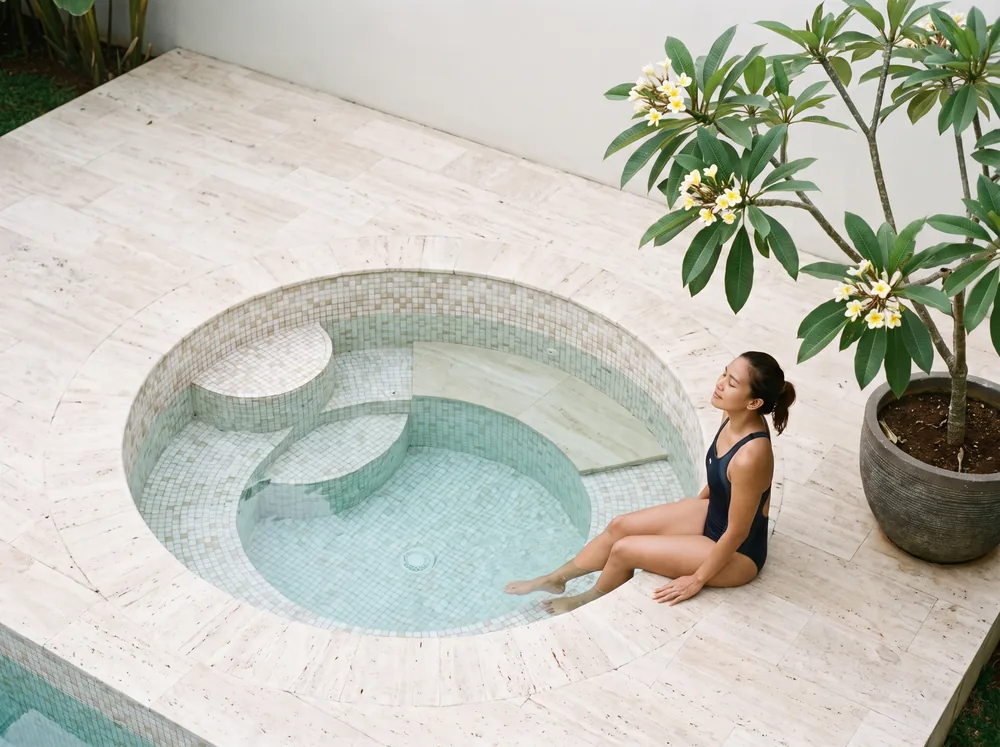
A ½–1 HP chiller draws far less power than a sauna stove — a 2,200 VA home can usually still manage it, though we still recommend a dedicated breaker line. The ideal spot: a covered terrace or a roofed area, since rain and UV shorten the machine's life. A chiller unit needs air circulation — we leave a gap from the wall at installation. In tightly packed clusters like Kelapa Dua, we also factor in where to place the chiller so its noise (similar to an outdoor AC unit) doesn't bother the neighbours.
The contrast package: sauna + cold plunge
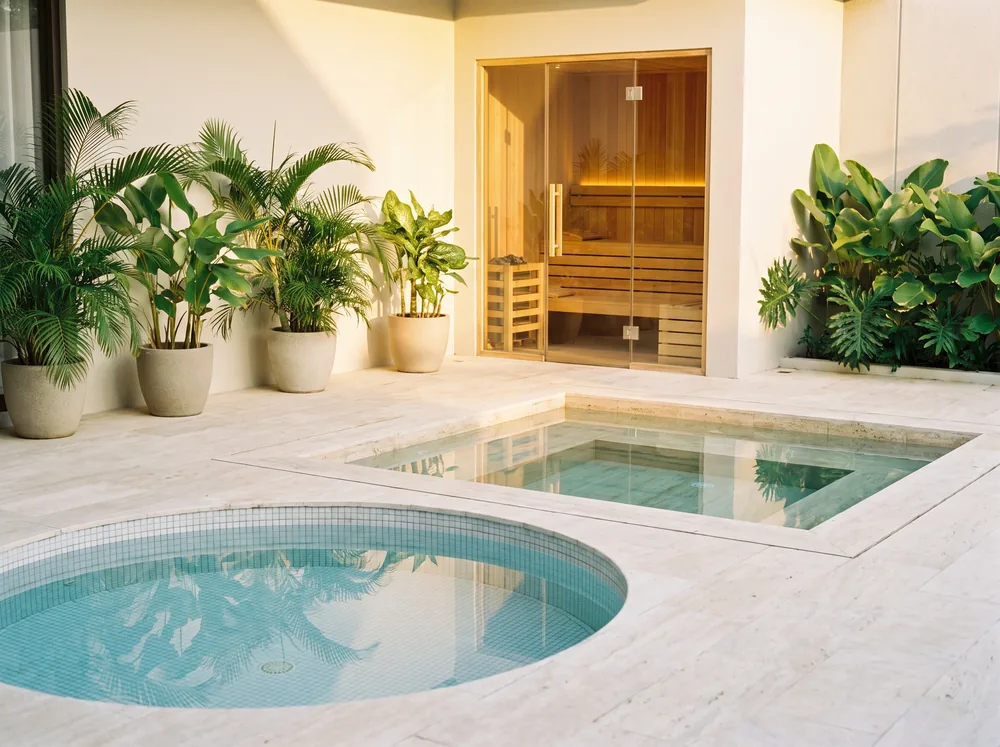
The pairing we build most often: a dry sauna at 90°C alongside a plunge at 5°C. Alternating hot and cold is the reason most people build both at once — and installing them together is cheaper than two separate projects, because the power, water, and team mobilization become one. If you're curious about the effect on the body, read the benefits of an ice bath, and the temperature protocol for beginners is in the article ice bath temperature for beginners.
The cold protocol: how to use it properly
Owning an ice bath isn't the same as knowing how to use it. What we advise new clients — and what keeps a routine going past the first month:
- Start warm, go down gradually. Beginners at 12–15°C for 1–3 minutes; after a few weeks drop to 8–12°C. A chiller makes this easy because the temperature is set digitally, not left to melting ice.
- Breath first, duration later. The real practice is calming your breath in the first 30 seconds — long, slow exhales.
- Consistency beats extreme cold. 3–5 sessions a week at 10°C is far more useful than once a month at 2°C.
Our full four-week beginner protocol is in the article ice bath temperature for beginners, and the evidence on the benefits — what's real and what's overblown — is in the benefits of an ice bath.
Cold therapy stresses the cardiovascular system. If you have a heart condition, blood-pressure issues, or are pregnant, consult a doctor first. Don't plunge alone at the start, and never after alcohol.
For gyms, recovery studios, and spas
A commercial cold plunge is a different animal from a home unit: a heavier duty cycle, a bigger chiller, more serious filtration, and surfaces that withstand dozens of users a day. We install units for gyms and recovery studios along the Serpong–BSD corridor; for a full recovery-room package see spa center equipment. Commercial projects usually finish in 4–8 weeks.
Maintenance and running costs
A cold plunge is a water system, so there's a routine like a mini pool: check and clean the filter each week, watch the water clarity, and top up now and then. With ozone or UV, the water lasts weeks without a change. Running costs — chiller electricity plus water — come to around Rp 300,000–700,000 per month depending on tub size, target temperature, and electricity rates. The chiller itself draws power on the scale of a large AC unit, so a 2,200 VA home can usually manage; we still fit a separate breaker line for safety. We explain all of it at handover, and a periodic service contract is available if you'd like us to do the upkeep.