Health · 6 min read
Sauna health benefits for Tangerang residents — real vs myth
The health benefits of a sauna come from one simple mechanism: heat of 70–90°C forces your body to cool itself. Blood vessels widen, your heart rate climbs the way it does on a brisk walk, and you sweat hard. That single response is where the research-backed effects come from — circulation, muscle relaxation, sleep — and it's also where the overblown claims are born, the ones you should ignore. This article sorts one from the other.
What happens to your body inside a sauna
The moment you sit on the upper bench, your skin temperature rises fast while your core temperature creeps up slowly. Your body responds in two ways: it widens the blood vessels near the skin and pumps the heart harder — research shows the rhythm can resemble light-to-moderate physical activity. The sweat glands work at full tilt; in a single session an adult can lose a fair amount of fluid, which is why a water bottle is the most important sauna accessory you own.
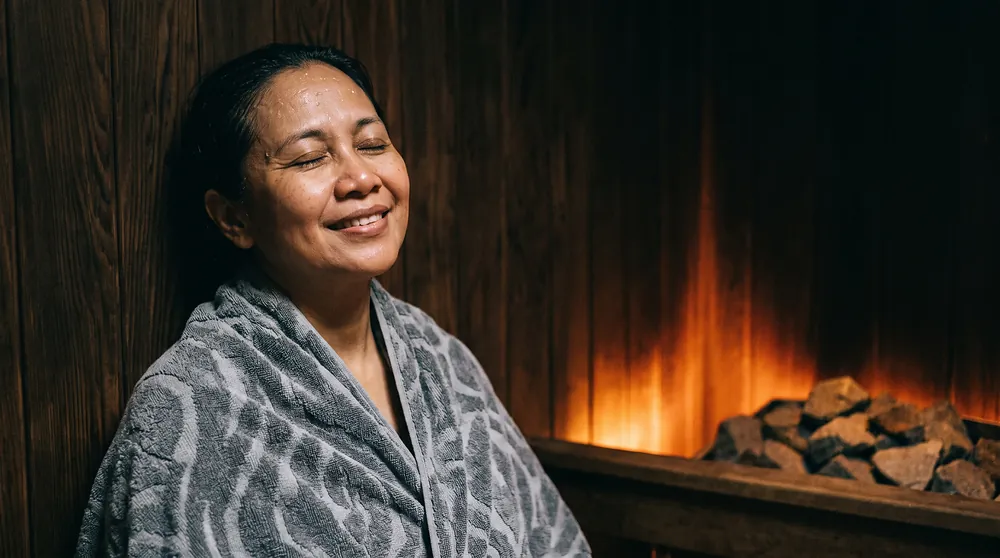
Benefits the research supports
- Muscle relaxation and recovery. Warm muscles are more supple; many athletes use a sauna after training to ease the next-day stiffness.
- Circulation. The way heat widens your blood vessels is a passive workout for the cardiovascular system — research links a regular sauna habit with better heart health.
- Sleep. The drop in body temperature after a session helps many people fall asleep faster — the same pattern as a warm bath before bed.
- Skin. Heavy sweating rinses out the pores; many users report their skin feels cleaner. That's a hygiene effect, not "detox".
- Stress. Fifteen minutes with no phone in a warm, quiet room — some of the benefit of a sauna is exactly that simple.
Claims you should ignore
A sauna is not a medical device. Three claims we hear often and never repeat to clients: that a sauna "flushes out toxins" (detoxification is the job of your liver and kidneys — sweat is almost entirely water and salt), that it makes you lose weight (the weight you lose is fluid, back the moment you drink), and that it cures disease. If a sauna seller promises a cure, close their catalogue.
Start with 10–15 minutes on the lower bench, drink water before and after, and step out the moment your head feels light. If you have a heart condition, unstable blood pressure, or you're pregnant — talk to a doctor first. Alcohol and a sauna never get along.
Heat alone is good; hot-and-cold is more interesting
Most of our clients in Tangerang don't stop at the sauna. The most requested combination: a hot session at 70–90°C, then a brief dip in a cold plunge at 5–15°C. That temperature contrast is exactly what has kept the hot-cold ritual alive for centuries in Finnish culture — and the reason we install the two side by side. We cover what cold water does to the body separately in the benefits of an ice bath.
Sauna and exercise: a combination that makes sense
One of the most common reasons our clients install a sauna is recovery after training. The logic is simple and backed by athletic practice: heat widens the blood vessels, warm muscles feel more supple, and many people report less muscle soreness the next day. The usual order is train first, then sauna — not the other way around, because walking into a sauna already tired and dehydrated is a bad idea. If you pair it with a cold plunge, one small caveat: cold immersion right after strength training can slightly blunt muscle growth, so leave a few hours' gap if your goal is adding mass. For cardio or on rest days, hot-then-cold is a comfortable recovery ritual.
How often should you use a sauna?
For general fitness, 2–3 sessions a week of 10–20 minutes each is the most common pattern — enough to feel the relaxation and sleep effects without taxing the body. Listen to your body: dizziness, nausea, or a racing heart means the session is over, right then.
If you're thinking about your own sauna
Gym and hotel saunas often mean queues, and the temperature is set for the average taste. A sauna at home means the temperature, the schedule, and the hygiene are entirely yours. We build custom saunas in Tangerang — from two-person cabins to a full wellness zone. Send a photo of your room over WhatsApp and we'll make you a free visualization of how it will look — from BSD City to Bintaro, with no visit required. Final measurements are taken at installation. You'll find a sense of the cost on the pricing page.